
Let’s be honest most people don’t think twice before picking up a random solder wire. If it melts, it works… right? Not exactly.
When you’re dealing with precision work whether it’s electronics, circuit boards, or delicate repairs the High-Quality Soldering Iron Wire can make or break the entire project. It’s like trying to paint a masterpiece with a worn-out brush. Sure, you can do it, but why make life harder?
In this guide, I’ll show you everything you need to know about picking the best leaded solder wire, learning about materials like tin metal, and making better choices that will really help you get better results.
Learning the Basics of Soldering Iron Wire
Let’s break it down before we get into the tips for choosing.
A soldering iron wire is a metal alloy that can be melted and used to connect two or more parts. When you heat it up, it melts and flows into the joint, then it hardens to make a strong electrical and mechanical connection.
Doesn’t that sound easy? The wire’s composition, thickness, and quality, on the other hand, have a huge impact on how well it works.
What is Leaded Solder and Why Is It Popular?
You’ve probably heard the term leaded solder tossed around in workshops. What’s going on?
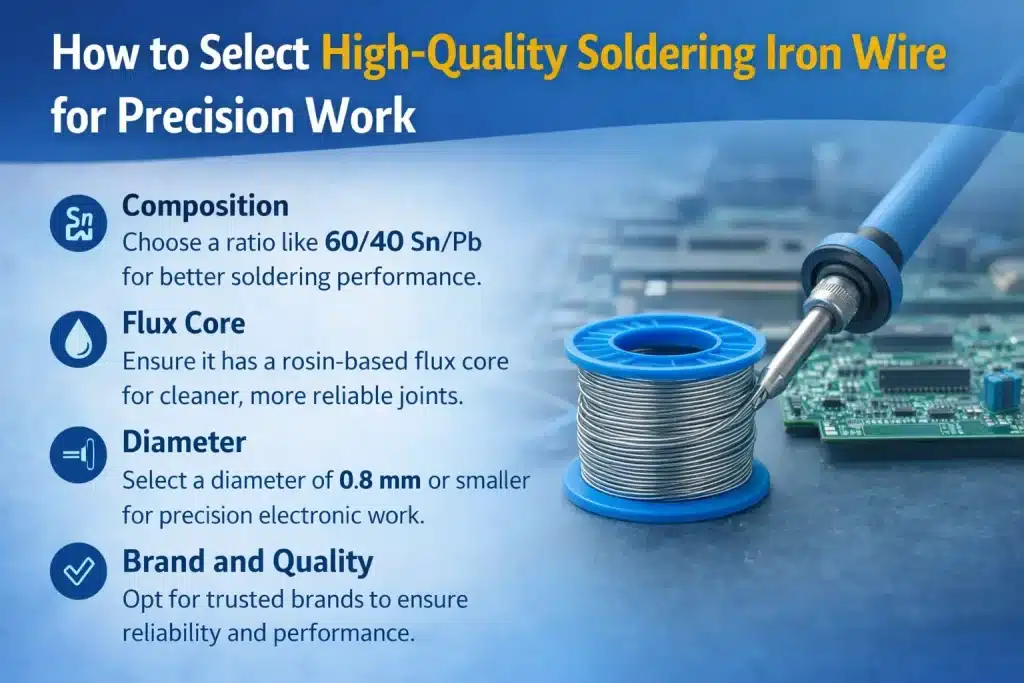
Tin and lead are typically combined in a ratio of 60/40 or 63/37 to create leaded solder. This combination provides you with:
Reduced melting point
A smooth flow
Strong and reliable joints
Because leaded solder wire is easier to manipulate and produces cleaner results, many professionals still favor it for precision work. It’s easier and more consistent than driving a manual car.
What Tin Metal Does in Solder Wire
Let’s talk about the real hero in this story: tin metal.
Tin is what makes solder wire melt and stick together well. More tin usually means:
- Better ability to conduct electricity
- More powerful joints
- Better resistance to corrosion
Think of tin as the thing that holds everything together. Your solder would be messy and not work right without it.
Why Quality Is Important in Precision Work
Picture this: you’re working on a tiny circuit board when the wire on your soldering iron starts to spit, oxidise, or not flow smoothly. It’s annoying, isn’t it?
High-quality solder wire makes sure that:
- Joints that are clean and shiny
- Little residue
- Less chance of short circuits
- Lasts longer over time
In precision work, even the smallest mistake can lead to failure. That’s why it’s important to buy the right leaded solder wire.
Important Things to Think About When Picking Solder Wire
Let’s get real. When you buy High-Quality Soldering Iron Wire, this is what you should really look for.
- Composition: Leaded vs. Lead-Free
Lead-free solder is better for the environment, but leaded solder is easier to work with.
Leaded solder wire is the best choice for accuracy and ease.
Lead-free solder is safer, but it’s harder to use.
When it comes to performance, leaded solder is often better for delicate electronics.
- Size of the wire: It matters
Thicker isn’t always better.
- Thin wire (0.3mm–0.6mm): Best for work that needs to be exact
- Medium wire (0.8mm–1.0mm): For everyday use
- Heavy-duty uses for thick wire (1.2mm or more)
If you want to do fine soldering, go thin. It gives you more control, like using a pen with a fine tip instead of a marker.
- Flux Core: The Secret Benefit
A lot of solder wire has a flux core inside. Flux cleans the surface and makes it easier for things to stick together.
Search for:
- Rosin core (common and reliable)
- Low-residue flux for cleaner work
Good flux is like having an assistant built in; it makes everything go more smoothly.
- Melting Point: Work Smarter, Not Harder
Different types of soldering iron wire melt at different temperatures.
- Lead-based solder has a lower melting point (about 183°C).
- Lead-free: Melting point is higher (about 217°C+).
A lower melting point means that parts that are important for precise work don’t have to deal with as much heat stress.
- Brand and Purity
Cheap solder wire often contains impurities. And impurities? They’re trouble.
High-quality wire offers:
- Consistent melting
- Better conductivity
- Fewer defects
If your solder looks dull or grainy, it’s probably not the best quality.
Common Mistakes to Avoid
Even experienced users mess this up sometimes. Here are some things to watch out for:
- Using thick wire for fragile tasks
- Not caring about the quality of the flux
- Picking cheap, low-quality tin metal solder
- Too hot because of the wrong melting point
If you stay away from these, you’re already ahead of the game.
Which one should you choose: leaded solder wire or lead-free?
Let’s put an end to this argument.
Choose leaded solder wire if you want accuracy and ease. It moves more easily, melts more quickly, and makes cleaner joints.
Lead-free is the way to go if you care about the environment or following the rules.
In simple terms:
- Leaded solder = Performance
- Lead-free = Compliance
How to Test the Quality of Solder Wire
Not sure if your soldering iron wire is good? Try this:
- Does it melt smoothly?
- Does it flow easily onto the joint?
- Does it leave a shiny finish?
If the answer is yes you’ve got a winner.
If it bubbles, smokes excessively, or looks dull it’s time to upgrade.
Storage Tips to Maintain Solder Wire Quality
Even the best solder wire can degrade if stored poorly.
Keep it:
- In a dry place
- Away from dust and moisture
- Sealed when not in use
Think of it like food, store it properly, and it stays fresh longer.
Best Use Cases for High-Quality Soldering Wire
Where does premium soldering iron wire really shine?
- PCB assembly
- Microelectronics repair
- DIY electronics projects
- Jewelry soldering
Anywhere precision matters, quality wire is your best friend.